
Marketing and Advertising to Veterans and the Military
written by Veterans Education Project, a partner of CollegeRecon
It is no great secret that postsecondary education enrollment is down significantly. The pool of potential applicants is getting smaller. This makes nonprofit board members and administrators across the country nervous.
According to Adriana Lleras-Muney, an economist at UCLA, “the growing gap in educational attainment could also worsen existing divisions over politics, socioeconomic status, race, and national origin.” This directly affects student Veterans and student Servicemembers who are guided – almost required – by military leadership to engage in higher education during or after their military service.
Hiring a hardworking, disciplined, and military professional to teach in the classroom is certainly a bonus for educators concerned about student performance. However, due to the drop in enrollment, colleges and universities are now more than ever incentivized to fill their empty seats with the guaranteed revenue generated by student veterans’ GI Bill benefits. This article highlights one such example and points to ways that schools can more honestly attract student Servicemembers and Veterans.
DO NOTs of Marketing and Advertising to Military & Veterans
Misrepresent Career Opportunities
According to a 2019 Complaint filed by the FTC, the University of Phoenix (UOP) allegedly crossed the line with its 2012 “Let’s Get To Work” advertising campaign. In its campaign, UOP featured numerous high-profile corporate employers, including Microsoft, Twitter, Adobe, and Yahoo. Specifically, UOP and its umbrella corporation represented that the university collaborated with companies to create career and employment opportunities for its students, and that it worked with companies such as Adobe, Microsoft, and Twitter to develop curricula tailored to the companies’ job requirements. When, in reality, alleged by the FTC, these companies were not working with UOP or its umbrella corporation to create job options for students or to develop curricula. An important section of the FTC’s Order prohibited UOP from equating business relationships to career opportunities for its students, as well as expressing or implying that such relationships create preferential treatment in the hiring process for its students.
Not Just For-Profits
There is a popular misconception that such illicit practices are limited solely to the for-profit sector. It is unfortunately common practice for career services offices at nonprofit, for-profit, and public postsecondary educational institutions to boast to current and prospective students of their relationships with businesses. For example, one career services officer might claim, “Just had coffee with the senior partner at __ law firm, and they are looking for a full-time law clerk.” While that may sound enticing, it is not a job. Rather, it is an opportunity to apply for a job, but some universities ignore this reality and continue to boast about their high-profile career opportunities to prospective students in promotional materials and on their websites, simply because their career services representative knows a couple of professionals in the local community.
“Military Friendly” Accolades and Outdated Imagery
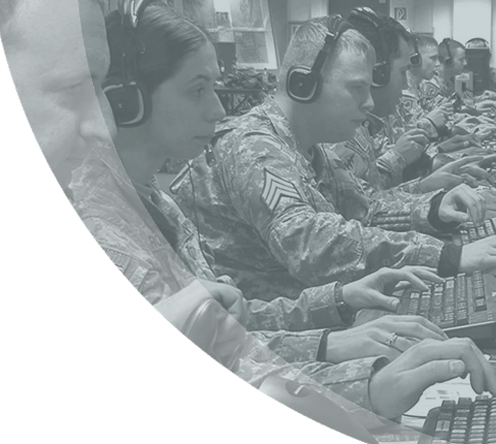
Nonetheless, UOP boasts some of the highest enrollment of student Veterans, and the for-profit sector continues to receive the most attention with respect to exaggerated advertising practices. As such, it may be best practice not to slap giant military-friendly accolades on a university website or use the generic, stock imagery with old, raggedy uniforms to try to reach military members and veterans with an interest in career-making educational opportunities.
DOs of Marketing and Advertising to Military & Veterans
Accurate Data and Transparency
Genuine advertising and marketing will prevail for those seeking best practices. Schools would be well-advised to conspicuously share information on:
- Mandatory disclosures
- Job placement rates of student veterans, factoring out internally hired graduates
- Number of enrolled student veterans and their graduation rates
- Number of enrolled student servicemembers and their graduation rates
- Student veterans center (or its equivalent)
- College or University’s 5-year plan
- GI Bill® School Feedback Tool and CollegeRecon School Rating Tool
- Federal / State legal rights for student veterans and student servicemembers
Prospective student veterans (VA), student servicemembers (DoD), and their respective support structures, i.e., friends, family, and military leaders, all depend on accurate information about potential educational institutions to make fully informed decisions about the pursuit of higher education.
Graduation Rates of Veterans
It is worth noting that an educational institution enrolled over 1,000 student veterans and cashed their GI Bill benefits, yet only graduated 40% of them each year. Conversely, it may be beneficial for prospective student veterans to know that a university, which boasts a sophisticated, professional student veterans webpage, has only 18 veterans enrolled, compared to its total of 8,000 enrolled students.
Disclosing Credit Transfer Policies
Unfortunately, some educational institutions are more interested in advertising their Olympic-sized swimming pools or luxury dormitories than disclosing credit transfer policies as required by the Higher Education Opportunity Act. The practice of hiding federally mandated disclosures in a complex system of web-based links should be replaced with genuine advertising that shares important information with student veterans, student servicemembers, and their support structures about their current or prospective choice of school, front and center.
by Veterans Education Project. For more info, please visit their website.