
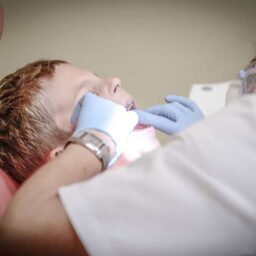
Dental Hygenist Degrees for Military and Veterans
Degree and Careers for Dental Hygienists
An education as a dental hygienist can open doors to a sustainable career with competitive pay. Dental hygienist jobs can be found in the private sector, government employment, and even opportunities with nonprofits and outreach programs throughout the country.Job requirements for a dental hygienic career typically include an associate's or bachelor’s degree education. Dental hygienists work alongside dentists; in some states, they can operate independently as a stand-alone dental health practice.
The US Bureau of Labor Statistics estimates employment opportunities for dental hygienists will grow 11% over the next decade, much faster than the average for all occupations.
Meeting the qualifications to become a dental hygienist will allow a career in the dentist's office and additional outside-the-clinic choices in corporate, educational, or public health settings. Applicants in the corporate sector can work in pharmaceutical or dental supply sales, manage a dental office, or work with dental insurance providers.
In the education sector, qualified dental hygienists can work as classroom, clinical, didactic or laboratory instructors and researchers. They can also work in the public health sector and community clinics.
Depending on the location and qualifications, a dental hygienist's median annual salary can be around $76,000. This field and its branches will continue to grow.
This career path can fit into the lifestyle of military spouses, who may relocate frequently to adapt to reassignment and their family’s needs. National need for these positions allow military spouses to find jobs across the country. To get started, military spouses should look into qualifying for assistance through MCAA to further their education in this field.
Dental Hygienist Responsibilities and Duties
A dental hygienist’s primary objective is preventative oral healthcare of their patients as they work closely with the dentist and other dental office personnel. Their direct patient duties may include:- Conducting initial exam and assisting in acts directed by a dentist
- Assessing the patient's overall dental health
- Documenting patient treatment and care plan
- Communicate with dentists throughout patient treatment
- Cleaning teeth using tools such as scrapers, polishers, and ultrasonic scalers to remove tartar, plaque, and stains
- Applying preventative treatments such as fluoride and sealants
- Collecting medical history
- Educating patients on preventative oral healthcare
- Taking and developing dental x-rays
- Delivery of local anesthesia as directed
For admission to a program in dental hygiene, you will need a high school diploma, problem-solving skills, attention to detail, technical abilities and the ability to show empathy toward patients. Some schools may also require a minimum GPA on high school transcripts.
Filters
Search and select multiple degree level.
Search and select multiple area of focus.
Religious Affiliation
 Partner School
Concorde Career College
Kansas City, MO
4 Year • Private • Urban
$1,986 BAH Rate • $1,261 Online BAH Rate
Yellow Ribbon Program
No Credit for Military Service
Partner SchoolODU Global
Norfolk, VA
4 Year • Public • Urban
$1,261 Online BAH Rate
Yellow Ribbon Program
Credit for Military Service
Acceptance Rate: 99% (Accessible)
Moore Norman Technology Center-Norman
NORMAN, OK
NCD • Public •
$1,770 BAH Rate • $1,261 Online BAH Rate
No Yellow Ribbon Program
Credit for Military Service
Meridian College
SARASOTA, FL
2 Year • For Profit •
$2,835 BAH Rate • $1,261 Online BAH Rate
No Yellow Ribbon Program
Credit for Military Service
Georgia Perimeter College
CLARKSTON, GA
2 Year • Public •
$2,514 BAH Rate • $1,261 Online BAH Rate
No Yellow Ribbon Program
Credit for Military Service
Miller-Motte College-Tulsa
TULSA, OK
2 Year • For Profit •
$1,764 BAH Rate • $1,261 Online BAH Rate
Yellow Ribbon Program
Credit for Military Service
Francis Tuttle Technology Center Rockwell Campus
OKLAHOMA CITY, OK
NCD • Public •
$1,770 BAH Rate • $1,261 Online BAH Rate
No Yellow Ribbon Program
No Credit for Military Service
Carrington College Portland OR
SACRAMENTO, CA
NCD • For Profit •
$2,505 BAH Rate • $1,261 Online BAH Rate
Yellow Ribbon Program
Credit for Military Service
Fortis College
SMYRNA, GA
2 Year • For Profit •
$2,514 BAH Rate • $1,261 Online BAH Rate
No Yellow Ribbon Program
No Credit for Military Service
Carrington College San Leandro
SACRAMENTO, CA
2 Year • For Profit •
$3,885 BAH Rate • $1,261 Online BAH Rate
Yellow Ribbon Program
Credit for Military Service
All-State Career School-Baltimore
BALTIMORE, MD
NCD • For Profit •
$2,736 BAH Rate • $1,261 Online BAH Rate
No Yellow Ribbon Program
No Credit for Military Service
Ross Medical Education Center-Saginaw
SAGINAW, MI
NCD • Private •
$1,629 BAH Rate • $1,261 Online BAH Rate
No Yellow Ribbon Program
No Credit for Military Service
Ross Medical Education Center-Saginaw
SAGINAW, MI
NCD • For Profit •
$1,629 BAH Rate • $1,261 Online BAH Rate
No Yellow Ribbon Program
No Credit for Military Service
Madison Adult Career Center
MANSFIELD, OH
NCD • Public •
$1,608 BAH Rate • $1,261 Online BAH Rate
No Yellow Ribbon Program
Credit for Military Service
Remington College-Cleveland Campus
MAPLE HEIGHTS, OH
2 Year • Private •
$2,124 BAH Rate • $1,261 Online BAH Rate
Yellow Ribbon Program
No Credit for Military Service
Kiamichi Technology Center-Mcalester
WILBURTON, OK
NCD • Public •
$1,587 BAH Rate • $1,261 Online BAH Rate
No Yellow Ribbon Program
Credit for Military Service
Yti Career Institute-Altoona
ALTOONA, PA
2 Year • For Profit •
$1,764 BAH Rate • $1,261 Online BAH Rate
Yellow Ribbon Program
No Credit for Military Service
Ross Medical Education Center-Brighton-Sr
BRIGHTON, MI
NCD • For Profit •
$2,286 BAH Rate • $1,261 Online BAH Rate
No Yellow Ribbon Program
No Credit for Military Service
Ross Medical Education Center-Davison-Sr
DAVISON, MI
NCD • For Profit •
$1,608 BAH Rate • $1,261 Online BAH Rate
No Yellow Ribbon Program
No Credit for Military Service
Ross Medical Education Center-Ann Arbor
ANN ARBOR, MI
NCD • Private •
$2,685 BAH Rate • $1,261 Online BAH Rate
No Yellow Ribbon Program
No Credit for Military Service
Choosing a Program/Career Path
When choosing a dental hygienist program, a person should consider the accreditation status of the institution offering the program from the Commission on Dental Accreditation, the type of CODA-accredited program and the length of the program.Some high-speed programs last between 17 and 22 months, while bachelor degrees may take as long as four years. To qualify, all programs must be CODA-accredited. Programs include entry-level or no-experience options to help learners earn their associate's, baccalaureate, or post-baccalaureate degrees.
Other programs are intended for dental hygienists who already have their license to continue pursuing higher levels of education. To work as a dental hygienist, an associates degree in the field would be the minimum requirement.
Programs should cover general knowledge of dental hygiene, biomedical science, dental science and dental hygiene science and include in-person practice and lab work supervised by an approved and qualified educator.
After completing a CODA-accredited degree, the next step is licensing. Requirements may vary by state, so be sure to look into state-specific requirements where you live or where you plan to work. To get licensed, all students must pass the NBDHE, or National Board Dental Hygiene Exam.
In addition to this, some states may require their state exam. A written and clinical exam will be required. The written exam has around 350 questions and tests knowledge of dental hygiene practice, clinical services, community health, interpreting x-rays and research principles. Study materials should be provided by the institution to prepare.
Other Career Paths for Licensed Dental Hygienists
One option for RDHs to explore would be to apply with the VA Dental Department. The Veterans Affairs Dentistry department offers dental hygienist careers that are outside the standard clinical experience and specifically help and support veterans. Applying to work with the VA Dental Service will add opportunities to build communities of veterans and families as well as connect with other like minded professionals.For those who are ready or prefer options outside the clinic, there is a plethora of options for those who qualify. Degrees and possibly certifications may vary for these jobs. However, all begin with a degree in dental hygiene. Some may require a full bachelors degree or postgraduate degree in dental hygiene, so look into the specifics when applying for these jobs:
- Community Health Worker: Collects data and discusses oral health within communities. Median annual salary: $47,000.
- Dental Hygiene Instructor: Teaches postsecondary dental hygienist programs. Average annual salary: $83,000.
- Postsecondary Education Administrator: Plans student instruction, administration, and services. Average annual salary: $112,000.
- Health Educator: Teaches promotion of oral health and wellness. Median annual salary: $47,000.
*U.S. Bureau of Labor Statistics. For more information click here.
Choosing Schools and Funding Options
An online search will show the immense quantity of schools that offer dental hygiene programs, making this job accessible to any interested candidates. When looking at a school, make sure they are CODA-accredited and have the specific plan you need. Also consider funding options available at each school.Is There Help to Fund a Degree in Dental Hygiene?
G.I. Bill
Students may use GI Bill funding and may be allowed to take classes at different schools as long as courses are in your degree plan, and they are required to finish the degree. You receive monthly payments by the end of the month. You can apply unused GI Bill money toward future degrees.Post 9/11 GI BIll recipients do not receive direct payments for books, supplies and housing. These payments are paid directly to ensure convenience and dependable funding.
RELATED:
- Start a Career as a Medical Assistant
- Paramedics and EMTs: Certificates, Degrees, and Job Opportunities