

The Navy Reserve Officers Training Program, also known as NROTC, is a leadership development program designed to commission high-quality leaders for the U.S. Navy, Marine Corps, and the Navy Nurse Corps.


NurseJournal.org says a variety of healthcare degrees or certificates "lead to fulfilling careers helping patients and colleagues, managing, teaching, and more." Not all healthcare certifications involve clinical work, "Students passionate about healthcare can enter the field without clinical components focused on direct patient care." If needles make you nervous and broken bones make you balk, then a career in the patient care field may seem out of reach. However, there are a surprising number of non-medical patient care careers to choose from where you can work directly with patients and have a positive impact on their health. If you enjoy helping people live a healthy life but are not interested in the traditional medical fields of patient care such as nursing and radiology, there are many non-medical patient care careers to explore, including:


According to Marquette University, "As a theatre major, you can design and build stage sets, create costumes, and give television and stage characters personality." Theatre majors combine "the words and ideas of the playwright, the movement and voices of the actors, and the scenic support of the designers and technicians to educate and entertain." A Theatre Degree, also commonly known as a Dramatic Arts, Theatre Arts or Theatre and Performance Arts Degree, encompasses stagecraft, acting, direction, performance, playwriting and other aspects of theatre. As students engage in classes and get experience behind and in front of the stage curtain, they fully understand theatre production. This type of degree encourages students’ creative, communication, and critical thinking skills and teaches them how to work well with others. Students typically earn a BA or Bacehlors in Fine Arts (BFA) when working toward a Theatre Degree. A BFA is more intensive program than a BA and prepares students for a career in theatre as opposed to other professions and industries.

The University of North Georgia says of its music and singing program, "The Bachelor of Music with a major in music and a concentration in vocal performance is designed for students who want to become professional performers, as a path to prepare students for a graduate study, and for those who wish to have careers as teaching in academia or private studios." As you can tell from the above, a Music and Singing Degree goes by a few different names, among them a Vocal Performance Degree, Vocal Arts Degree or a Music and Vocal Performance Degree. General Music Degrees can also focus on performance, whether it be vocal or instrumental. Schools with this degree program will generally require an audition for admission. While some institutions may offer performance courses online, most are in person, due to their technical and hands-on nature.

Are you interested in the universe beyond our world? A major in astronomy is your ticket to the cosmos, where you’ll study galaxies, astrophysics, physics, and more. You’ll get the chance to work on—and engage in—in-depth research, hands-on experimentation, using state-of-the-art technology. Astronomy is the scientific study of space, celestial objects, and the universe. Astronomers use the principles of physics and mathematics to study the fundamental nature of the universe and celestial bodies, including the sun, moon, planets, and stars. A Degree in Astronomy can lead to a career in a variety of fields, including:

Many people dream of a rural lifestyle and returning to a simpler, less chaotic way of life. Perhaps a small farm or a bigger one. A Degree in Agriculture is a great opportunity for those wishing to enter this field either as an academic accomplishment or to support their own future agricultural ventures. Along with becoming self-sufficient in your own agricultural dreams, earning a degree in agriculture can lead to a variety of careers, including:

According to Illinois State University, the study of geography "gives us an understanding of the world. It demonstrates how the physical and human systems on our planet work and connect to maintain life. Geographers possess specific and valuable skills to address the significant societal challenges facing our planet. ISU also notes that climate change, conflicts, and natural disasters all need the expertise of geographers."


The Air Force ROTC Program requires cadets to meet academic standards throughout the entire program. Cadets on scholarship must maintain a 2.5 grade point average, and non-scholarship cadets must maintain a 2.0 grade point average.
An important component of academic eligibility for the AFROTC is the Air Force Officer Qualification Test (AFOQT), which is a critical measure of a cadet's aptitude that qualifies them for Officer Training School and the positions of Pilot, Combat Systems Officer, and Air Battle Manager.
The AFOQT is taken during a cadet’s sophomore year and may only be taken twice. It can be compared to the SAT or ACT as it measures verbal and mathematical aptitudes but measures additional aptitudes that are relevant to career fields within the Air Force
After taking the test, cadets will receive results in the areas of: Pilot, Combat Systems Officer, Air Battle Manager, verbal, quantitative, and academic aptitude.
Physical fitness is an important and constant requirement for an Air Force ROTC cadet. The Physical Fitness test (PFT) is taken in the fall and spring semesters each year to ensure that cadets continue to meet the Air Force fitness requirements.
The PFT consists of an abdominal measurement, a minute of push-ups, a minute of sit-ups, and a 1.5 mile run. While there is a rest period of up to five minutes between events, cadets must earn 75 points overall and meet minimum requirements in each category.
Another component of eligibility for the Air Force ROTC program is meeting the medical standards laid out by the Air Force. Cadets must undergo a medical examination conducted by a military doctor or a designated civilian contractor. The examination is scheduled and reviewed by the Department of Defense Medical Examination Review Board (DoDMERB).
It is possible to obtain a waiver for the medical component of the AFROTC. For students who apply for AFROTC through the High School Scholarship program, a waiver request will automatically be forwarded from DoDMERB to the Air Education and Training Command Surgeon General (AETC/SG) for consideration.
College students or cadets who are submitting a waiver request must do so through the Air Force ROTC Detachment Commander at your school to Air Education and Training Command Surgeon General (AETC/SG) for consideration. Should the waiver request be denied, there are certain extenuating circumstances that justify further consideration of the instructions in the DoDMERB notification letter about rebuttals.

The University of Illinois at Urbana-Champaign says geology is the"study how the Earth works, both today and in the past. We like to think of geology as the ‘liberal arts’ of the sciences. That’s because geology takes ideas from math, physics, chemistry, and biology and applies them to the Earth." Geology is also the study of the structure of the Earth. Geology studies the liquids and solids of the Earth, the rocks of our planet, and how they change over time. Casting a wider net, geology also studies the features of any terrestrial planet and natural satellite (including the moon) so as to better understand the Earth’s past and to help predict its future. Geologists may work in the following fields:


NewSchool of Architecture and Design describes architecture degrees as preparation to become "licensed professionals who plan and design buildings that are safe, beautiful, and functional." An architect is "usually involved in every phase of the design process and development of a building. For students who possess both left and right brain acumen, the architecture major may be a career path worth pursuing – combining elements of science and math with multi-layered levels drawing upon the creative arts; it can be a challenging and rewarding job for the right candidate.
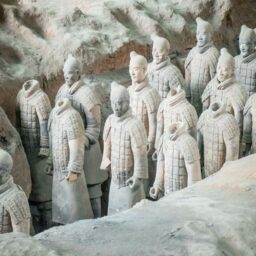
The University of North Carolina at Chapel Hill describes archaeology degrees as the "systematic study of the human past through its material remains, by means of the excavation, recovery, and interpretation of artifacts and other associated evidence." Students learn about the "historical, environmental, and comparative components enable the examination of different culture systems through time and space, as well as the reconstruction of past lifeways and the interpretation of ancient social, political, and economic systems." A Degree in Archaeology is the perfect field of study for students interested in exploring humankind's past. Archaeology education focuses on studying the human past through its material remains. A comprehensive program in archaeology will equip students with the knowledge and skills for excavating, recovering, and interpreting artifacts and other evidence of human history.

The University of Illinois Chicago says those who graduate with entrepreneurship degrees are equipped with "knowledge of business planning, financing, marketing, management, information technology, and consulting. You’ll learn how to apply this knowledge to new ventures, small enterprises, and family businesses." Some graduates may start business ventures, join family businesses, or go to work for a corporate entity "while they are students or immediately after graduation," and according to UIC, "Entrepreneurship majors are often hired into management training positions by employers who value entrepreneurial thinking." A Degree in Entrepreneurship is more than just another business program. It is ideal for students seeking to be their own boss and those who desire to build a business from the ground up. An Entrepreneurship Degree provides students with an educational foundation for success in any career.

According to Dickinson College, an American Studies degree offers "a broad understanding of the American history" with coursework focused on helping students "think analytically and systematically about American structures and institutions, and the representation of various cultural groups in art, literature, and popular culture." This degree is also concerned with "drawing together different strands of the American experience, American Studies majors have pursued careers in public service, politics, law, education, business, and media and journalism." American Studies is a degree for students interested in all aspects of American culture, including politics, history, economics, media, film, and other aspects that weave together to form the fabric of American society. A degree in American Studies is interdisciplinary, examining the American identity from many perspectives.
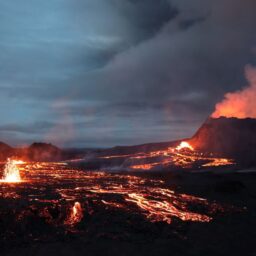
A Degree in Geosciences, also known as Earth Science, focuses on a greater understanding of our planet. From the depths of the oceans to the outer reaches of space, it is an interdisciplinary approach to the study of the planet. According to West Chester University, Geosciences programs teach "the composition, structure, and other physical aspects of the Earth." Geoscientists study "the Earth's geologic past and present by using sophisticated instruments to analyze the composition of earth, rock, and water. Many geoscientists help to search for natural resources such as groundwater, metals, and petroleum. Others work closely with environmental and other scientists to preserve and clean up the environment."

The College of DuPage describes working in radiation therapy as a highly skilled career that requires knowledge of "physics, radiation safety, patient anatomy and patient care. Radiation Therapists administer targeted doses of radiation to the patients body to treat cancer and other diseases."

According to Florida State University, "Students in digital humanities gain skills and knowledge to work in all areas of the knowledge economy by gaining proficiency both in 'soft' skills (creativity, adaptability, communication, teamwork) while at the same time developing technical skills necessary for digital work." The official site adds that digital humanities is an interdisciplinary course of study "at the intersection of humanities and computing, bringing traditional print humanities fields into conversation with data science, library and information studies, and discipline-cutting fields such as media studies or Internet studies."

Pharmacy Technicians assist pharmacists in preparing and dispensing prescription medication. Pharmacy Technicians (also known as Pharmacy Techs or PTs) may work directly with customers, patients, or healthcare professionals to dispense medications. Pharmacy technicians may work in retail pharmacies, including those located in drugstores and hospitals. Pharmacy technicians also work in various settings, including grocery stores, acute care facilities, nursing homes, and managed care clinics. While two-thirds of pharmacy technicians work in retail pharmacies, they also work in facilities where they become an integral part of the healthcare team, working directly with nurses, doctors, and fellow technicians. Pharmacy techs work under the direct supervision of a licensed pharmacist and assist in all aspects of preparing prescription medications.
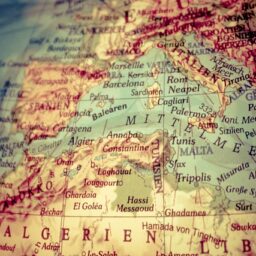
Butler University says its International Studies program was created to teach "an awareness of the diversity, complexity, and interdependence of the world community, and to provide them with the necessary background to understand and analyze the political, economic, social, and cultural aspects of current world problems and issues." International Studies majors learn the "cultural competency necessary to be successful in an increasingly complex and global job market" and prep graduates for jobs in a wide range of fields, from business to journalism. International Studies is for students interested in a global education, including culture, politics, history, economics, media, film, and many other aspects that weave together to form the fabric of society. A degree in International Studies is interdisciplinary, examining the world from many disciplines and perspectives. Similarly named degrees may include Global Studies, International Relations, and International or Global Affairs.

A Degree in Classical Studies (similarly named Classics, Classical Cultures, and/or Civilizations) is an interdisciplinary field of study focused on Greco-Roman antiquity. The University of Washington describes classical studies degrees as exploring "...the literature, history, art, archaeology and philosophy of the ancient Greeks and Romans, primarily through English translations. " U of W notes there are many learning opportunities, including "interactive language classes, specialized courses on topics ranging from gender and sexuality to STEM in the ancient world, and affordable study abroad opportunities. From this work, they develop intermediate skills in ancient Greek or Latin, as well as advanced skills in innovative analysis, creative and collaborative problem solving..." Students pursuing this degree study ancient Greek and Roman civilizations and cultures that these empires absorbed, including Central and Eastern Europe, North Africa, Egypt, and the Middle East. Students will study a variety of fields including:
