
Combat Engineering: Civilian Jobs After The Military
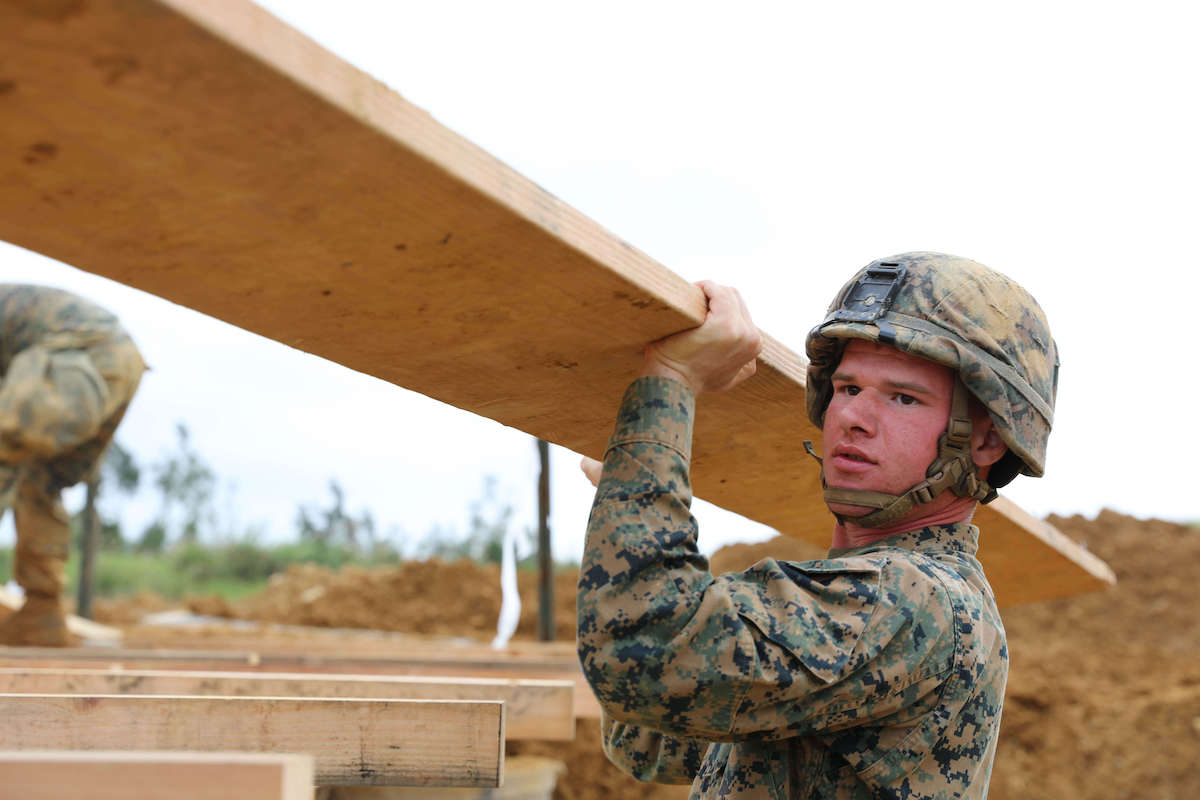
All of the skills you acquire while serving in the military as a combat engineer can help with future careers in the civilian world.
Jobs for Combat Engineering Veterans
Here are just some of the civilian jobs you may qualify for after serving in the military as an engineer (Combat Engineer, Construction, Electrician.)
Electrician
An electrician works on and installs wiring in homes, businesses, factories, you name it. They work indoors, outdoors, on new construction, renovation, or the installation of new equipment.
There are several levels to being an electrician, including residential wireman, journeyman electrician, and master electrician. A combat engineer’s experience, such as with wiring explosives, can help in this position.
Like the military, you need to have a high school diploma to get started. But in many states, you will have to pass an exam before you can start your apprenticeship. The best way to prepare for the exam and your career as an electrician is to take classes at your local junior college or vocational “trade” school, or training programs through your local electrician’s union.
Apprenticeships can last a few years and will allow you to learn the trade and get prepared for going out on your own as an electrician. After you complete your apprenticeship, you will need to get your license in your state if your state requires that, or in your city or county if they require that.
>> Find opportunities with job recruiters and staffing companies looking to assist veterans and military spouses. Get started today!
Construction
Entering the construction industry can also be a viable post-combat engineering career choice. Using the skills you have learned during your time in the military.
Like an electrician, construction workers can work on commercial, industrial or residential construction. Building structures, bridges, and road work. There are also options available when starting out in this career.
You can register as an apprentice and receive both on-the-job training and in-class training. Or, take classes at a transitional or technical/vocational college. You can take a shorter program, sometimes just a few weeks, to earn a certificate that can be used in job searches. You can also look for an entry-level job to get started right away, learning while you’re at work.
Building Inspector
Finding a career as a building inspector is another suitable choice for someone who has worked as a combat engineer. As a building inspector, you would examine the structural quality and overall safety of various buildings, ensuring that they comply with municipal and state codes, ordinances, and zoning regulations.
They use tools that take measurements, identify potential programs, and sample materials.
Since working as a building inspector can involve climbing high ladders or crawling through tight spaces, going into this career field after being a combat engineer can be a smart idea. The knowledge and experience you have gained in that MOS can help you with this type of career.
A high school diploma is typically required for this line of work, although some employers may require additional qualifications. The training requirements can also differ based on your jurisdiction or state.
Going to school to earn a certificate or an associate’s degree would be a good idea, and some go on to gain their bachelor’s degree which will allow them to replace work experience when looking for a job. Many states also require a license or certification. You can also gain extra certifications in order to help you become more employable.
Civil Engineer
Becoming a civil engineer after your military career is another option. To be a civil engineer, you would need to have an advanced understanding of engineering, particularly the construction of roads, dams, buildings, and grids. Combat engineers will have gained this type of training during their time in the military.
Those with knowledge or interest in the creation and maintenance of large-scale infrastructure can also excel in this career, as well as leaders with strong organizational skills.
Working as a civil engineer, you will conceive, design, build, supervise, operate, construct and maintain infrastructure projects and systems in the public and private sector.
This would include roads, buildings, airports, tunnels, dams, bridges, and systems for water supply and sewage treatment. Some of the more common employers for civil engineers are engineering services, state, local, or federal governments, and nonresidential building construction companies.
You would need to get your bachelor’s degree in order to work as a civil engineer. Obtaining a graduate degree is ideal if you aspire to a senior position. Some of the classes you would take for this type of degree would be math, statistics, engineering mechanics, and systems. License requirements to work as a civil engineer vary by state.
Combat Engineering Background
United States first formed a military engineering capability in 1775, when the Continental Congress established an Army with a Chief Engineer and two assistants. Then, in 1802, the Corps of Engineers was organized by the President.
In the Army, Combat Engineers are a part of the United States Army Corps of Engineers and fall under MOS 12B. The Army Corps of Engineers are the builders of the Army, there are about a dozen jobs, including Prime Power Production Specialist (MOS 12P), Bridge Crewmember (MOS 12C), Prime Power Production Specialist (MOS 12P), Prime Power Production Specialist (MOS 12P) and Carpentry and Masonry Specialist (MOS 12W) who often do their work in combat situations.
The Navy has a Civil Engineer Corps and Seabees, which form the Naval Construction Force (NCF) of the United States Navy. The Navy Seabee Community is comprised of Occupational Field-7 ratings – Builder (BU), Construction Electrician (CE), Construction Mechanic (CM), Engineering Aide (EA), Equipment Operator (EO), Steelworker (SW) and Utilities Tech (UT).
In the Air Force, you can find engineers in both civil engineering and combat engineering roles, specifically in the Rapid Engineer Deployable Heavy Operational Repair Squadron Engineer units, known as “Red Horse.”
Air Force engineering specialties include Structural Specialists (AFSC-3E3X1), Electrical Systems Specialists (AFSC-3E0X1), Utilities Systems Specialists (AFSC-3E4X1), Engineering Specialists (AFSC-3E5X1), and Explosive Ordnance Disposal Specialists (AFSC-3E8X1).
In the Marine Corps, combat engineers fall under the 1371 MOS. This is part of the larger group of combat engineering-related occupations (1300 Series MOS). Other Marine engineering jobs include MOSs such as Heavy Equipment Mechanic (MOS 1341), Engineering Equipment Operator (MOS 1345), and Metal Worker (MOS 1316).
RELATED:
Job Hunting
- How To Find a Job as a Veteran
- Military Resume Writing Services
- Top High Paying Jobs for the Military
- Money: Unemployment Insurance After the Military
- Money: Things You’ll Have to Pay For After the Military
Civilian Jobs After the Military:
- Civil Affairs
- Infantry
- Special Operations Forces
- EOD
- Military Police (MP)
- Interpreters and Translators
>> Find opportunities with job recruiters and staffing companies looking to assist veterans and military spouses. Get started today!
About the author

Julie Provost is a freelance writer, and blogger. She lives in Tennessee with her National Guard husband and three boys.
