
Skilled Trades for Military Veterans
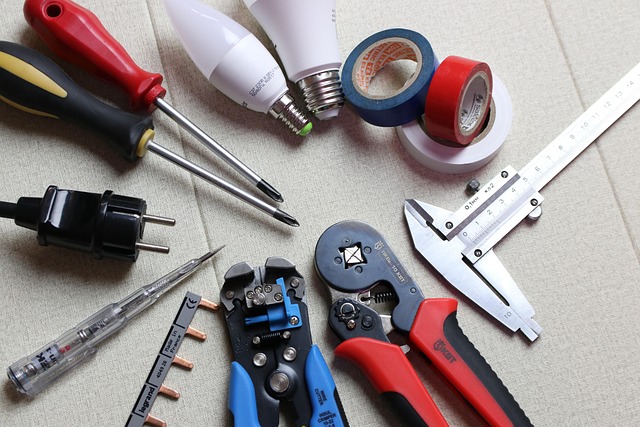
If you are thinking of leaving your military career for a civilian one, there are many choices to make, including whether to stay in your current career field or move into something new. The dilemma for some military members is that their in-uniform skill sets don’t match civilian employment opportunities…or don’t seem to. If you are an explosive ordnance technician, work in Air Force pararescue, or other highly specialized opportunities, you may be considering growing new skills and trying a different line of work. Certifications in skilled trades are one way to do this, and if you’re interested in learning one, our Q&A on skilled trades for veterans can help.
Skilled Trades for Military Veterans Q&A
Q: How can active-duty service members earn civilian trade experience before leaving the service?
A: Troops can use the Department of Defense SkillBridge program authorized under Title 10 of the United States Code. The program allows eligible service members to train with civilian employers during their final months of service while keeping their full military pay, housing allowance, and medical benefits.
Junior enlisted personnel are eligible for up to 120 days, while senior enlisted members and officers are eligible for 60 to 90 days. Because slots require commander approval, members need to apply six to nine months before discharge.
Q: Which trade credentials carry weight in commercial and industrial sectors?
A: For electrical work, an apprentice card through the Independent Electrical Contractors or the International Brotherhood of Electrical Workers is one path to a journeyman license. Heating and cooling technicians must pass the Environmental Protection Agency Section 608 Universal test to handle refrigerants. North American Technician Excellence tests prove field skill.
Heavy commercial work may require American Welding Society Certified Welder papers for structural steel and pipe. For advanced manufacturing, credentials from the National Institute for Metalworking Skills and the Smart Automation Certification Alliance are for computerized machining and industrial controls.
>> Find VA-approved schools — try our School Finder tool.
Q: Why do some struggle to get civilian journeyman licenses?
A: State boards regulate trades under independent state laws. These state boards often decline to count military maintenance logs toward civilian journeyman hours. To fix this, you can log active-duty hours through the United Services Military Apprenticeship Program and keep your Joint Services Transcript updated.
The program records hours in accordance with Department of Labor apprenticeship rules, creating records that civilian unions and state boards accept.
Q: What military funding programs cover civilian credential costs?
A: Army COOL, Navy COOL, Marine Corps COOL, and Air Force COOL pay examination fees and registration costs for civilian credentials during active service. Spending COOL money keeps GI Bill entitlement intact for later civilian use.
Q: How can veterans use the Post-9/11 GI Bill during a civilian trade apprenticeship?
A: Veterans in registered apprenticeships can draw a tax-free monthly housing allowance from the Department of Veterans Affairs. This housing payment starts at 100 percent of the local rate for the first six months, dropping every six months as employer wages rise.
Q: Do non-profit or union programs exist for military veterans?
A: Helmets to Hardhats links transitioning troops to building trade apprenticeships without placement fees. The United Association Veterans in Piping program runs an 18-week fast-track training course in welding, HVAC, or sprinkler fitting at select military bases. They provide instruction and union apprenticeship placement upon separation.
Q: What should service members expect regarding starting pay and physical demands?
A: Starting apprentice pay may be lower than total compensation for mid-grade noncommissioned officers once tax-free allowances are no longer an option. Experienced journeymen, instrumentation specialists, and master mechanics regularly pass six figures within three to five years. Choosing technical specialties that lead to project management, commissioning, or quality control may help keep your career viable.
>> Find VA-approved schools — try our School Finder tool.
Examples of Skilled Trade Certifications
- Automotive Technology
- Collision Repair and Refinishing
- Computer Networking / Information Technology
- Diesel Technology
- Machining and Manufacturing
- Medical Assistant / Medical Assistant Technology
- Welding Technology
Examples of Skilled Trades
Electricians
Commercial electricians install, maintain, and test power distribution, lighting systems, and industrial equipment. Veterans with experience as aviation electricians, interior communications electricians, or generator mechanics may be well-suited for four- or five-year registered apprenticeships through organizations such as the International Brotherhood of Electrical Workers or the Independent Electrical Contractors.
Commercial HVAC-R Technician
Heating, ventilation, air conditioning, and refrigeration technicians work on climate control, industrial chillers, and commercial cold storage systems. The field requires an Environmental Protection Agency Section 608 Universal certification to handle refrigerants. Service members in engineering and environmental control specialties may be a good fit for this trade.
Pipefitter and Steamfitter
Pipefitters lay out, assemble, and maintain high-pressure piping systems. These move steam, chemicals, gases, and water through manufacturing plants, oil refineries, and power generation stations. The United Association offers dedicated pre-apprenticeship pathways for separating troops through its Veterans in Piping program.
Structural and Pipe Welder
Welders fuse metal parts using shielded metal arc, gas metal arc, and gas tungsten arc welding processes on structural frameworks, pressure vessels, and pipelines. The American Welding Society sets national certification benchmarks. Navy hull technicians, Army allied trades specialists, and Marine combat engineers. These troops have transferable skills for civilian welding yards and fabrication shops.
Industrial Maintenance Millwright
Millwrights install, dismantle, repair, and align heavy machinery, turbine generators, conveyor systems, and industrial pumps in manufacturing and processing facilities. The trade requires precision alignment, rigging, and mechanical troubleshooting. This career field may be an excellent match for military vehicle mechanics and engine crews.
Heavy Equipment Operating Engineer
Operating engineers run excavators, bulldozers, cranes, trenchers, and concrete pavers for civil infrastructure and heavy commercial construction projects. The International Union of Operating Engineers provides structured apprenticeship pipelines. Experience with military combat engineering or heavy transport equipment provides a head start.
Elevator and Escalator Constructor
Elevator technicians install, modernize, and service passenger elevators, freight lifts, escalators, and moving walkways. Governed largely through the National Elevator Industry Educational Program, this trade combines mechanical rigging, electrical circuitry, and microcomputer controls.
CNC Machinist and Tool and Die Maker
Machinists set up and operate mills, lathes, and wire electrical discharge machines to produce precision parts for aerospace, defense, and medical hardware. Credentials from the National Institute for Metalworking Skills help veterans enter advanced manufacturing shops without four-year engineering degrees.
Commercial Fire Suppression and Sprinkler Fitter
Sprinkler fitters install, test, and maintain automatic wet- and dry-chemical fire-extinguishing systems in hospitals, residential high-rises, and industrial complexes. The trade involves pipe fabrication, hydraulic testing, and code compliance inspections.
Power Grid Lineman
Lineworkers erect power poles, transmission towers, and underground conduits to deliver high-voltage electricity across public and private utility grids. Military line specialists and field wire personnel frequently enter utility apprenticeships through programs like the Electrical Training Alliance.
Diesel and Heavy Fleet Technician
Fleet mechanics troubleshoot, overhaul, and service commercial diesel engines, hydraulic systems, air brakes, and chassis electronics for trucking fleets, railways, and municipal transit systems. Military wheeled-vehicle mechanics and tracked-vehicle repairers may have very compatible mechanical skills.
Wind Turbine and Clean Energy Field Technician
Wind technicians climb and maintain utility-scale wind turbines, servicing electrical generators, mechanical gearboxes, and hydraulic braking systems at height. Veterans may shine in this field due to the demanding safety protocols and outdoor work environments.
>> Find VA-approved schools — try our School Finder tool.
About the author

Joe Wallace is a 13-year veteran of the United States Air Force and a former reporter/editor for Air Force Television News and the Pentagon Channel. His freelance work includes contract work for Motorola, VALoans.com, and Credit Karma. He is co-founder of Dim Art House in Springfield, Illinois, and spends his non-writing time as an abstract painter, independent publisher, and occasional filmmaker.
