
ROTC Frequently Asked Questions (FAQ)
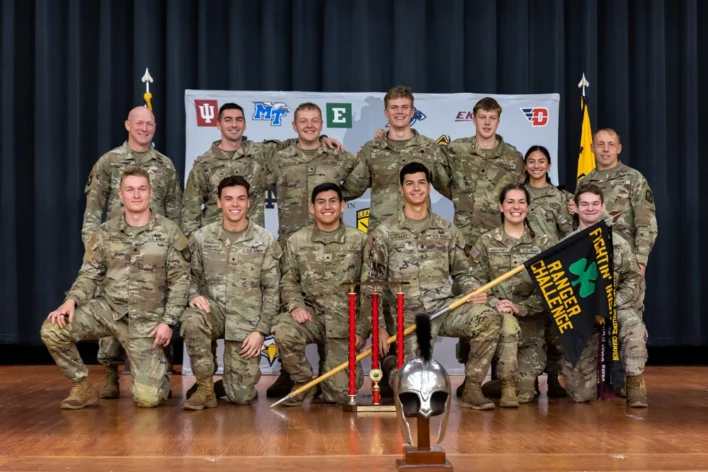
The Reserve Officer Training Corps, or ROTC, is a college-based program that trains students to become commissioned officers in the U.S. military. Unlike enlisting, where an individual joins the military directly in a non-officer role, ROTC is integrated into your university experience. For those with questions about the program, refer to our ROTC FAQ section.
Students take ROTC classes and participate in military training alongside regular academic coursework. Upon successful completion of the degree and the ROTC program, applicants will graduate as a commissioned officer—a Second Lieutenant in the Army, Air Force, or Marine Corps, or an Ensign in the Navy.
ROTC FAQ: Frequently Asked Questions About the Reserve Officer Training Corps
Am I joining the military by simply enrolling in an ROTC class?
No. For the first one to two years, students can typically enroll in introductory ROTC classes with no military commitment. This allows you to experience the program, learn about military culture, and see if it’s the right fit for you without any obligation to serve. A service commitment only begins when you accept a scholarship or formally contract into the advanced portion of the program, which usually happens during your sophomore or junior year.
What are the basic eligibility requirements to join an ROTC program?
While specific requirements can vary slightly between branches, the general qualifications include:
-
- Be a U.S. Citizen.
- Meet specific age requirements (typically, you must be commissioned before you turn 31, but waivers are available).
- Meet the required physical fitness and medical standards.
- Maintain a minimum GPA (usually 2.0-2.5 or higher).
- Be enrolled as a full-time student at a university that hosts an ROTC unit or has an agreement with an ROTC unit.
What are the primary benefits of participating in ROTC?
The benefits are substantial and impact both your education and your future career.
-
- Financial Assistance: ROTC offers competitive, merit-based scholarships that can cover full tuition, fees, and book allowances. All contracted cadets and midshipmen also receive a monthly living stipend.
- Leadership Development: The core of the ROTC curriculum is leadership. You’ll learn and practice management, decision-making, and teamwork skills that are highly valued in any profession.
- Guaranteed Career: Upon graduation, you have a guaranteed, well-paying job as an officer in the U.S. military, where you will lead personnel and manage significant resources right from the start of your career.
What is the typical weekly time commitment for an ROTC student?
The commitment is manageable and designed to fit within a college student’s schedule. A typical week involves:
-
- Physical Training is multiple sessions per week, usually held early in the morning.
- Military Science class, typically one academic class per semester, focused on military history, leadership, and tactics.
- A hands-on weekly “Leadership Lab” training session where you practice skills like land navigation, tactical movements, and leadership drills.
- In total, you can expect to spend between 5 to 10 hours per week on ROTC-specific activities, but your experience may vary.
U.S. Army ROTC FAQ
The largest program, Army ROTC, offers a wide range of opportunities and is available at over 1,000 colleges and universities nationwide.
What makes Army ROTC unique?
Army ROTC is known for its size and flexibility. It offers the widest variety of career fields—known as branches—for its officers. Upon commissioning, you could serve in anything from Infantry or Aviation to Cyber Operations or the Medical Service Corps. The program emphasizes small-unit leadership and adaptability, preparing officers for a diverse array of global missions.
What scholarships are available through Army ROTC?
The Army provides several scholarship options:
-
- National High School Scholarships: For high school students, these scholarships can be for two, three, or four years.
- Campus-Based Scholarships: For students already enrolled in college who decide to join ROTC.
- Minuteman Scholarships: These are two-, three-, or four-year scholarships that guarantee a position in the Army National Guard or Army Reserve upon commissioning, with no active-duty requirement.
What is the service obligation after commissioning from Army ROTC?
The standard total service obligation is eight years. For scholarship recipients, this is typically fulfilled by serving at least four years on active duty, followed by four years in the Inactive Ready Reserve (IRR). For non-scholarship graduates who commission, the typical requirement is three years on active duty and five years in the IRR. Options to serve full-time in the Army Reserve or National Guard are also available.
What is summer training like for Army ROTC cadets?
The primary summer training event is Advanced Camp, a mandatory course at Fort Knox, Kentucky, that all cadets must complete between their junior and senior years. It’s a rigorous leadership evaluation where cadets are tested on their tactical and leadership skills in a simulated operational environment.
What career paths can I pursue as an Army Officer?
The Army has many basic officer branches to choose from. Your placement is determined by your preferences, academic performance, and evaluation at Advanced Camp. Branches include:
-
- Combat Arms: Infantry, Armor, Field Artillery, Aviation
- Combat Support: Military Intelligence, Cyber, Signal Corps, Military Police
- Combat Service Support: Logistics, Finance, Adjutant General (HR), Medical Service Corps
U.S. Navy & Marine Corps ROTC (NROTC) FAQ
NROTC trains and commissions officers for both the U.S. Navy and the U.S. Marine Corps through a unified program. Students are designated as “midshipmen.” There are many colleges offering Navy ROTC.
How does the Navy Option differ from the Marine Option in NROTC?
While both options are part of the NROTC unit at a university, their training and focus are distinct.
-
- Navy Option: Midshipmen are focused on naval science, shipboard operations, and the core missions of the Navy. Their summer training takes place on ships, submarines, or with aviation units.
- Marine Option: Midshipmen take additional Marine Corps-specific courses and attend different summer training. Their focus is on developing the combat leadership skills required to lead Marines. They participate in more land-based tactical training during the school year.
What scholarships are available through NROTC?
NROTC offers a scholarship program that pays for full tuition, university fees, a book stipend, and a monthly subsistence allowance. The primary scholarship is the National Scholarship, awarded to high school students. There are also scholarships for students attending Minority Serving Institutions (MSIs) and for students already in college who join the program.
What is the service obligation after commissioning from NROTC?
The service obligation varies based on the career path:
-
- Navy Option: A minimum of five years of active duty. Graduates who enter specialized fields like Naval Aviation (Pilots, Naval Flight Officers) incur a longer commitment, typically eight to ten years after they complete their flight training.
- Marine Option: A minimum of four years of active duty.
What is NROTC summer training like?
Summer training, known as a “summer cruise,” is a key part of the NROTC experience and provides real-world exposure to the fleet.
-
- Navy Option: Midshipmen spend several weeks each summer on various cruises. This could involve serving aboard a destroyer, an aircraft carrier, a submarine, or with an aviation squadron anywhere in the world.
- Marine Option: The most critical summer training for Marine Option midshipmen is a six-week evaluation at Officer Candidates School (OCS) in Quantico, Virginia. This physically and mentally demanding school screens candidates for their potential to lead Marines.
What careers are available for Navy and Marine Corps officers?
-
- Navy: Officers are assigned to a “community.” These include Surface Warfare (ship driving and operations), Submarine Warfare, Naval Aviation (Pilots and Flight Officers), Special Warfare (SEALs), and various staff corps like Intelligence and Cyber Warfare.
- Marine Corps: After commissioning and completing The Basic School, new officers are assigned a Military Occupational Specialty (MOS). These include Infantry Officer, Artillery Officer, Combat Engineer, Aviation (Pilot or Flight Officer), Logistics Officer, and Cyber Operations Officer.
U.S. Air Force & Space Force ROTC (AFROTC) FAQ
AFROTC is the program responsible for commissioning officers into both the U.S. Air Force and the U.S. Space Force. Cadets follow the same program until they are selected for a specific service. There are many colleges offering AFROTC.
How do I join the Space Force through AFROTC?
The U.S. Space Force sources the majority of its new officers through AFROTC.
Cadets interested in the Space Force must enroll in AFROTC, and during their junior year, they can volunteer for selection into the Space Force.
Selection is highly competitive and primarily based on the service’s needs and the cadet’s academic major, with a strong emphasis on Science, Technology, Engineering, and Math (STEM) fields.
What types of scholarships does AFROTC offer?
AFROTC offers several types of scholarships, with a strong preference for cadets pursuing technical and STEM degrees.
-
- Type 1: Pays full college tuition, most fees, and a book allowance.
- Type 2: Pays tuition and select fees up to a certain limit, which may vary depending on the program, and a book allowance.
- In-College Scholarships: Available for cadets who join the program while already in college.
What is the service obligation after commissioning from AFROTC?
The standard active-duty service commitment for most officers is four years. However, for certain specialized career fields, this obligation is longer.
-
- Pilots: 10 years after completing flight training.
- Combat Systems Officers (CSOs) & Air Battle Managers: 6 years after completing training.
- Space Force Officers: The commitment is typically between four and six years.
What is summer training like in AFROTC?
The cornerstone of AFROTC summer training is Field Training, a mandatory two-to-three-week program typically completed between the sophomore and junior years. It serves as a high-stakes evaluation of a cadet’s leadership potential, military discipline, and teamwork abilities. Successfully completing Field Training is a requirement to be admitted into the Professional Officer Course (the last two years of the program) and to ultimately commission.
What are the career fields for Air Force and Space Force officers?
Both services offer highly technical and mission-critical careers.
-
- Air Force: Career fields include Combat Systems Officer, Cyber Operations Officer, Intelligence, Aircraft Maintenance, Logistics Readiness, and Special Warfare Officer.
- Space Force: All officers are assigned to the Space Operations career field, but they can specialize in areas like orbital warfare, space electronic warfare, satellite command and control, and space battle management. Other career fields, such as intelligence, Cyber, and Engineering, directly support space missions.
About the author

Joe Wallace is a 13-year veteran of the United States Air Force and a former reporter/editor for Air Force Television News and the Pentagon Channel. His freelance work includes contract work for Motorola, VALoans.com, and Credit Karma. He is co-founder of Dim Art House in Springfield, Illinois, and spends his non-writing time as an abstract painter, independent publisher, and occasional filmmaker.
