
VA Survivors & Dependents Educational Assistance Education Benefits (Chapter 35)
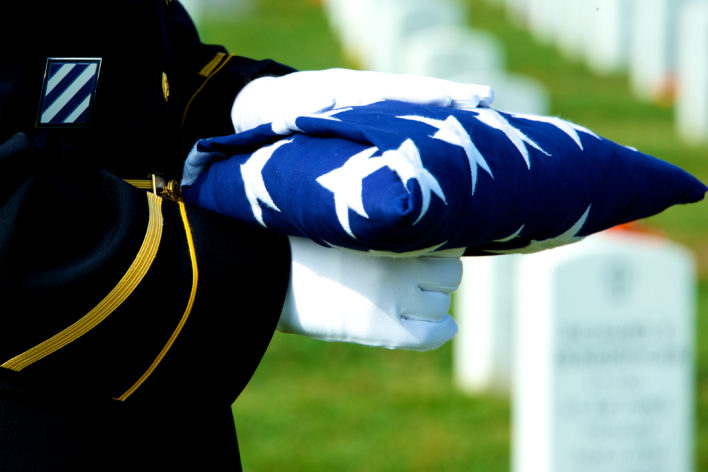
VA Survivors & Dependents Educational Assistance Benefits
Surviving spouses and children of military service members and veterans qualify for VA education benefits to help pay for college, career training, and other educational expenses. Depending on their circumstances, family members are eligible for Survivors’ and Dependents’ Educational Assistance (Chapter 35), the Fry Scholarship, or transferred Post-9/11 GI Bill benefits.
Survivors’ and Dependents’ Educational Assistance (DEA)
The Survivors’ and Dependents’ Educational Assistance program, also known as Chapter 35, provides education and training assistance to eligible spouses and children of veterans and service members.
Unlike the Post-9/11 GI Bill, which generally pays tuition and fees directly to the school, DEA provides monthly payments to beneficiaries to help cover educational expenses.
>> Find VA-approved schools near you with our School Finder tool.
Who Qualifies for Chapter 35 Benefits?
Spouses and children qualify for DEA if the veteran or service member meets at least one of the following conditions:
- Has a permanent and total service-connected disability.
- Died as a result of a service-connected disability.
- Died in the line of duty.
- Has been missing in action or captured by a hostile force in the line of duty for more than 90 days.
- Was forcibly detained or interned by a foreign government or entity in the line of duty for more than 90 days.
- Is receiving hospital or outpatient treatment for a permanent and total service-connected disability and is likely to be discharged because of that disability.
Children qualify whether married or unmarried. Spouses who divorce the qualifying veteran or service member lose their DEA eligibility. Spouses or children on active duty can’t use this benefit. If they want to use it after leaving service, they can’t have a dishonorable discharge. Remarriage also affects a surviving spouse’s eligibility; however, certain exceptions apply.
What Are the Age and Time Limits for Chapter 35?
The VA changed its DEA eligibility rules effective August 1, 2023, eliminating the time limit for many eligible children and spouses. For dependent children, there is no deadline for using DEA benefits if at least one of the following applies:
- They became eligible for DEA on or after August 1, 2023.
- They turned 18 on or after August 1, 2023.
- They graduated from high school or received a GED on or after August 1, 2023.
Children who became eligible, turned 18, and completed high school before August 1, 2023, have eight years to use their benefits before turning 26. Exceptions apply if the child became eligible between ages 18 and 26, experienced the death of a parent during that period, or served in the military.
For eligible spouses, the time limit depends on when the qualifying event occurred. If the event occurred on or after August 1, 2023, there is no deadline for using DEA benefits.
For earlier qualifying events, benefits generally expire after 10 years. However, the eligibility period extends to 20 years if the service member died on active duty or under certain circumstances involving a permanent and total disability determination. A spouse also receives a new 10-year eligibility period if the veteran was rated permanently and totally disabled and later died.
These changes do not increase the number of education benefit months available. They extend the period during which eligible beneficiaries use them.
What Education Expenses Does Chapter 35 Cover?
DEA benefits may be used for undergraduate and graduate degree programs, vocational and technical training, apprenticeships, and on-the-job training. Eligible beneficiaries also use their benefits for certain licensing and certification tests, correspondence courses, distance learning, and other approved educational programs.
Students whose training began on or after August 1, 2018, receive up to 36 months of DEA benefits. Those who began training before that date qualify for up to 45 months. The amount paid depends on enrollment status and training type. The VA sends monthly payments directly to the beneficiary, not to the school’s tuition bill.
>> Find VA-approved schools near you with our School Finder tool.
Can You Receive Chapter 35 and DIC Benefits at the Same Time?
Dependency and Indemnity Compensation (DIC) is a separate VA benefit available to certain surviving family members. It provides tax-free monthly payments to eligible survivors of service members and veterans whose deaths meet VA requirements.
Eligible surviving spouses can get both payments at the same time. Dependent children receiving DIC must give up those payments when they begin using DEA benefits.
How Do You Apply for Chapter 35?
Eligible spouses and children apply online or by submitting a Dependents’ Application for VA Education Benefits (VA Form 22-5490). The application process includes selecting an approved school or training program and notifying the school’s certifying official that the applicant will use VA education benefits.
Applicants who have not selected a school can still apply. For mailed applications, the appropriate VA regional processing office depends on whether the applicant has chosen a school or training program.
Marine Gunnery Sergeant John David Fry Scholarship
The Fry Scholarship helps qualifying spouses and children pay for college or career training after losing a loved one who served in the military or Selected Reserve. Eligibility generally depends on the circumstances of the death and whether it occurred on or after September 11, 2001.
The program provides benefits similar to the Post-9/11 GI Bill, including tuition, housing, and educational supplies.
Who Qualifies for the Fry Scholarship?
Surviving spouses and children qualify if the service member or Selected Reserve member died on or after September 11, 2001:
- While performing active-duty military service, or
- From service-related disability no more than 120 days after leaving active duty, or
- From a service-connected disability within 120 days of separation or release from active duty, or
- As a Selected Reserve member who died in the line of duty while not on active duty, or
- As a Selected Reserve member who died from a service-connected disability.
For Selected Reserve members who died in the line of duty while not on active duty, qualifying service includes active duty for training or inactive duty training. State active duty performed by National Guard members does not qualify under that provision.
Eligible children can be married or unmarried. They generally must be at least 18 years old, or have completed high school or earned a GED, to use the benefit.
What Are the Age Limits for the Fry Scholarship?
For children whose qualifying parent died before January 1, 2013, benefits expire at age 33. However, there is no time limit if the child turned 18, graduated from high school, or received a GED after January 1, 2013.
Children whose qualifying parent died on or after January 1, 2013, have no deadline for using their Fry Scholarship benefits. There is also no time limit for children whose qualifying parent was a Selected Reserve member who died in the line of duty other than active duty or from a service-connected disability.
Can Surviving Spouses Keep Fry Scholarship Benefits After Remarriage?
Surviving spouses who qualify for the Fry Scholarship remain eligible if they remarry.
The VA has also changed its rules for surviving spouses whose Fry Scholarship benefits previously expired. Beginning January 2, 2025, eligible spouses may have their unused benefits restored, even if they have remarried.
Spouses seeking restoration must submit a new VA Form 22-5490. Unlike dependent children, surviving spouses also receive DIC payments while using Fry Scholarship benefits.
What Benefits Does the Fry Scholarship Provide?
The Fry Scholarship offers up to 36 months of education benefits, which help cover:
- Tuition and fees
- Monthly housing expenses
- Books and supplies
- Tutorial assistance
- National examinations
- Licensing and certification tests and preparation courses
- Work-study opportunities
- Certain relocation expenses for students moving from rural areas
>> Find VA-approved schools near you with our School Finder tool.
How Do You Apply for the Fry Scholarship?
Surviving spouses and eligible children apply for the Fry Scholarship using the same application required for Chapter 35 benefits, VA Form 22-5490.
Submit applications online or by mail. After applying, students should contact the certifying official at their chosen school to confirm the educational program is VA-approved and submit their enrollment information. Applicants who have not selected a school can apply before enrolling.
Transferred Post-9/11 GI Bill Benefits for Family Members
Spouses and dependent children of eligible service members may be able to use transferred Post-9/11 GI Bill benefits to pay for college or career training.
Unlike DEA and the Fry Scholarship, transferred benefits don’t depend on the service member’s death or disability. The Department of Defense (DoD) must approve the service member’s request to transfer unused education benefits to an eligible family member.
Who Can Transfer Post-9/11 GI Bill Benefits?
Service members must be on active duty or in the Selected Reserve when requesting the transfer and meet the following requirements:
- They must have completed at least six years of military service when the transfer is approved.
- They must agree to serve an additional four years.
- The intended beneficiary must be enrolled in the Defense Enrollment Eligibility Reporting System (DEERS).
Purple Heart recipients do not have to meet the usual requirement of six years of military service or agree to serve another four years to transfer their Post-9/11 GI Bill benefits. However, they must submit their transfer request while still serving on active duty.
Service members submit their requests through milConnect. Once the DoD approves the transfer, eligible spouses or children apply to the VA to use those benefits.
Can Surviving Family Members Use Transferred GI Bill Benefits?
If the DoD approved a transfer before the service member’s death, eligible family members can still use the remaining benefits.
The VA also recognizes certain circumstances in which a service member dies before completing the additional service obligation associated with an approved transfer. In those cases, dependents remain eligible despite the unfulfilled service requirement. Surviving dependents with unused transferred benefits may also request that those benefits be reassigned to another eligible dependent if the service member died after August 1, 2009.
When Can Spouses Use Transferred GI Bill Benefits?
Eligible spouses begin using transferred benefits as soon as the transfer is approved, including while the service member is on active duty. The deadline depends on when the service member separated from active duty.
- For separations before January 1, 2013, spouses generally have 15 years after separation to use their benefits.
- For separations on or after January 1, 2013, there is no time limit.
Spouses do not qualify for the monthly housing allowance while the service member is on active duty. However, they may qualify after the service member separates, subject to the program’s other requirements. A divorce does not automatically cancel benefits previously transferred. A former spouse may continue using them unless the service member or veteran revokes the transfer.
>> Find VA-approved schools near you with our School Finder tool.
When Can Dependent Children Use Transferred Benefits?
Dependent children must wait until the service member has completed at least 10 years of military service before using transferred Post-9/11 GI Bill benefits.
The child must also be at least 18 or have completed high school or an equivalent program.
Unlike certain Chapter 35 and Fry Scholarship beneficiaries, children using transferred Post-9/11 GI Bill benefits must use them before turning 26. Eligible children qualify for the monthly housing allowance even while the service member is on active duty.
What Expenses Do Transferred GI Bill Benefits Cover?
Service members may transfer up to 36 months of their remaining Post-9/11 GI Bill entitlement to eligible dependents.
Depending on the beneficiary’s eligibility and the approved program, transferred benefits cover undergraduate and graduate degrees, vocational training, apprenticeships, on-the-job training, and certain flight training programs. They also cover fees, housing, books, supplies, and qualifying licensing or certification examinations.
Payment amounts depend on the service member’s benefit eligibility, the educational program, and applicable VA rates.
How Do Service Members Transfer Their GI Bill Benefits?
The service member must request a Transfer of Education Benefits (TEB) through milConnect while serving on active duty or in the Selected Reserve. The DoD reviews their request and determines whether the service member meets the applicable requirements.
Once a GI Bill benefits transfer has been approved, the service member may adjust or revoke unused benefits. Additional dependents generally must be added while the service member is still serving.
How Do Dependents Apply to Use Transferred Benefits?
After DoD approves the transfer, the spouse or dependent child must apply to the VA for permission to use the education benefits. Submit the application using VA Form 22-1990e, Application for Family Member to Use Transferred Benefits. Adult applicants applying online must sign in using their own Login.gov or ID.me account. They cannot submit the application through the service member’s account.
For beneficiaries under 18, a parent or guardian must complete the application on their behalf and submit it by mail or through an accepted VA electronic submission method. If the application is approved, the VA issues a Certificate of Eligibility identifying the available education benefits and applicable deadlines.
Can You Qualify for Both Chapter 35 and the Fry Scholarship?
Some surviving children do qualify for both Chapter 35 DEA benefits and the Fry Scholarship. However, the rules governing both programs depend on when the service member died and the circumstances that establish eligibility.
If the parent died in the line of duty before August 1, 2011, an eligible child may use both programs, but not simultaneously. Combined benefits are limited to 81 months of full-time training. If the parent died in the line of duty on or after August 1, 2011, a child may use both programs only when DEA eligibility is based on a separate qualifying event. Combined benefits are limited to 48 months of full-time training.
Surviving spouses who qualify for both DEA and the Fry Scholarship must select one program. Once they choose, they cannot switch to the other.
Finding Schools That Accept VA Education Benefits
Not every college, training provider, or educational program is approved for VA education benefits. Before enrolling, beneficiaries should confirm that both the school and the specific program qualify.
The VA GI Bill Comparison Tool lets prospective students search for approved schools, review benefit information, and compare options. For additional college options, use College Recon’s School Finder to explore schools and programs for military-connected students.
About the author

Michelle Nati is a contributing writer to CollegeRecon who has written about higher education and finance for Granita Media/Big Edition site Work and Money. She's also written law content for Leaf Group's Legal Beagle site and is a ghostwriter of non-fiction books. She lives in Los Angeles and spends her spare time combing flea markets for vintage photos and decor and playing with her dogs, Jellybean and Jukebox.
