
Survivors & Dependents Educational Assistance VA Education Benefits (Chapter 35)
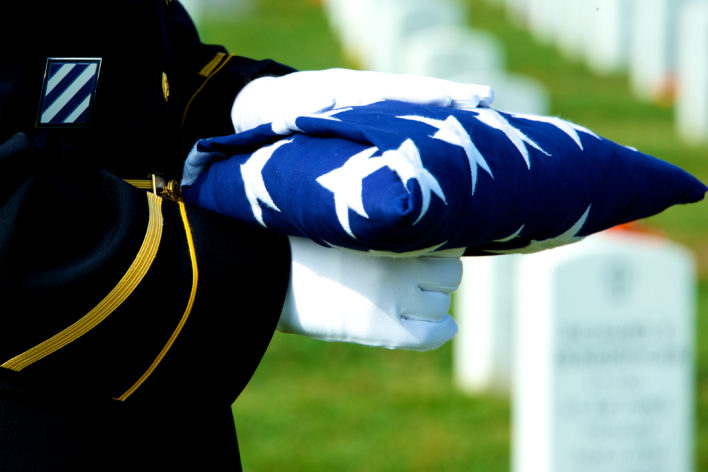
Surviving spouses and dependents of military veterans may be eligible for VA benefits to further their education. Below, you’ll find a variety of VA education options spouses and school-age dependents can use to help pay for college or other higher education opportunities.
There are several options for spouses and college-age children who are survivors of a military member who has died. They include using transferred Post-9/11 GI Bill benefits, the Department of Veterans Affairs Survivors and Dependents Educational Assistance program, and the John Fry Scholarship program.
Survivors’ and Dependents’ Education Assistance (DEA)
Children or spouses of veterans and service members who have died, or those service members who are missing in action, or have suffered a disability directly related to military service, can apply for Survivors’ and Dependents’ Education Assistance (DEA)/Chapter 35.
Qualification standards require at least one of the following conditions to be met regarding the veteran or service member who must have experienced:
- Permanent and total service-related disability
- Died on duty
- Death related to service-related disability
- Missing in action/Captured/Forcibly Detained while on duty for more than 90 days
- Receiving medical treatment in or out of a hospital for service-related total disability
Age and Time Limits for Using DEA Benefits
Qualifying children and spouses of service members and veterans may use their DEA benefits at any time if the veteran or service member died, was captured, or became disabled by August 2023; you turned 18 years old after August 2023; or you graduated high school after August 2023.
If any of these three conditions occurred before August 2023, your benefits have a cap on how long you can use them. Qualifying recipients can use benefits after age 18 for 8 years.
If the recipient joins the military, these benefits are excluded during active duty. To qualify after service, the service member must be honorably discharged and may use the benefits only until age 31. For spouses, benefits last 10 years from the service member’s date of death. If the service member dies in the line of duty, benefits extend to 20 years.
If the spouse or beneficiary joins the service, they cannot use these benefits while on active duty and must be given an honorable discharge at their point of exit to be eligible.
What Benefits Can I Get?
With this program, you will receive payments to help cover the cost of college and graduate degree programs, career-training certificates, apprenticeships, and on-the-job training, education, and career counseling. View approved programs and schools first before enrolling. Before enrolling, contact the certifying official to confirm the program is eligible for VA benefits.
>> Find VA-approved schools near you with our School Finder tool.
How Do I Get My Monthly Payment?
The VA sends monthly payments directly to the beneficiary. If you are in a college degree program, you do not need to prove enrollment for DEA benefits. However, those in non-college-degree programs must verify their enrollment status monthly to receive DEA benefits.
Learn how to verify your enrollment for DEA benefits
Can I Get DEA and DIC benefits?
If you’re the child of a Veteran or service member, you cannot qualify for VA Dependency and Indemnity Compensation (DIC) if you are already 18 years old and receiving DEA. If you are a military spouse, you can get both program payments simultaneously.
What If I Qualify For DEA And The Fry Scholarship?
You may choose only one program if you qualify for the DEA and Fry Scholarship. Once the choice is finalized, you cannot change to the other program unless your parent died in the line of duty before August 2011.
How Do I Apply?
Applicants can apply online or mail VA Form 22-5490. If your program has already begun, send your form to the regional processing office listed on the last page of the completed form.
Contact the certifying official at your school and let them know you applied for VA education benefits; ask them to submit and verify your enrollment online for approval. If you have not enrolled, send your completed form to the regional processing office first.
If you need help with your application, contact an accredited representative through your potential school program or regional processing office.
Fry Scholarship
Children of service members can receive Fry Scholarship benefits until age 33 if they graduated high school or turned 18 before January 2013.
If a selected reserve parent dies from a service-related disability, Fry benefits will apply anytime. If a service parent died on duty before August 2011, the child may qualify for the Fry Scholarship and Survivors’ and Dependents’ Educational Assistance Program (DEA).
If you also receive Dependency and Indemnity Compensation (DIC), you will no longer be able to use DIC once your Fry Scholarship payments begin. The marital status of the service member’s child does not affect qualification status.
What Benefits Can I Get?
To receive Fry Scholarship benefits, you must first choose a qualifying school, ask your school’s certifying official to verify the program is eligible for VA benefits, complete a Dependent’s Application for VA Benefits (VA Form 22-5490), and submit it to your regional VA office.
You may also apply online. Minors applying for benefits must also have a parent or guardian sign the document.
If approved, you may qualify for up to three years of benefits to help pay for tuition, housing, books, and school supplies.
If you are already enrolled and are studying in a qualifying program, contact your certifying school official and ask them to fill out the VA Enrollment Certification (VA Form 22-1999) online in the Enrollment Manager system.
If you qualify for the Fry Scholarship and DEA, you must choose one. The choice will be official and fixed once made, unless your parent died on duty before August 2011.
>> Find VA-approved schools near you with our School Finder tool.
Transferred Post-9/11 GI Bill for Family Members
Children and spouses of veterans and service members may be able to go to school using transferred GI Bill education benefits, but transferring those benefits today requires the military member to be on active duty, have the ability to recommit to the military, and there must be a new commitment must be made as a condition of transfer approval.
Transfers cannot be made after a service member leaves active duty. Transfers cannot be approved if the service member is denied reenlistment or otherwise ineligible to reenlist. A formal transfer request is required, meaning surviving spouses and dependents who want to use Post-9/11 GI Bill benefits after a service member has died must have already applied for and been approved for a transfer of benefits.
You may not be able to receive Post-9/11 GI Bill benefits as a surviving family member if that transfer wasn’t approved before the service member’s death, but the DoD may handle this on a case-by-case basis. Don’t assume you won’t get benefits unless you request them first.
When Can I Use Transferred Benefits?
If You’re a Spouse
If you received transferred benefits as a spouse, you can use the benefits right away. You can use them while the service member is on active duty or after they’ve separated from service.
If the separation from service occurred before January 2013, the benefits can be used for up to 15 years. If the separation occurs after January 2013, the benefits can be used at any time, with no time limit. Both situations depend on the service member or veteran not canceling the transfer of benefits to the recipient.
If You Are A School-Age Dependent
Children of veterans and service members can use their transferred benefits after the service member completes 10 years of service and the child has either graduated from high school or turned 18. These benefits must be utilized before the child turns 26 to be valid.
Using Transferred Benefits
Once received, the recipient must also use the transferred benefits by a deadline set by the service member. Applicants can only use the benefits of one program at a time.
Transferred benefits may help with the costs of undergraduate and graduate programs, non-college degree programs or trade school certifications, flight training, on-the-job training, apprenticeship or correspondence school programs.
You can use funds to cover housing costs, books, and supplies related to your program of study, as well as fees for testing, licensing, and certification exams.
Transferring Post-9/11 GI Bill Benefits?
To start the GI Bill transfer process, you can apply online now. Log into your Login.gov or ID.me account. You may also apply by mail by using the Application for Family Member to Use Transferred Benefits VA Form 22-1990e and sending it to your local VA office.
Learn more about how to transfer GI Bill benefits
What If The Service Member Hasn’t Requested a Transfer of Benefits?
To receive a Transfer of Education Benefits (TEB), the veteran or service member must first request it through milConnect while still serving.
A family member cannot initiate a DoD application. Transfers are not automatically approved. If you are unsure of the status of a transfer request, check with the command support staff at your current base or log in to the platform you used to request the transfer.
Once approval is received from the Department of Defense, a Certificate of Eligibility will be issued, containing information on benefits and deadlines available to the recipient. Then, the recipient applies to use the transferred benefits.
>> Find VA-approved schools near you with our School Finder tool.
About the author

Julie Provost is a freelance writer, and blogger. She lives in Tennessee with her National Guard husband and three boys.

Kena Sosa
Kena Sosa is an award-winning author, filmmaker and percussionist. She earned her BA from OLLU and her MBEGT from SMU. She published two award-winning children’s books. Kena has written for CBS/DFW Local and Multicultural Review Magazine. She was the Guest Editor for the Fall/Winter 2023 ChildArt Magazine issue. Kena has written for Recon Media since 2023.
